Mleitod: A Retro-Pixel Font for Bold Branding
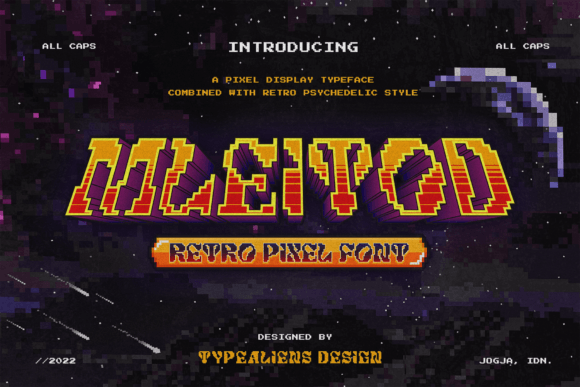
I was sketching out a brand board for a retro-inspired café last week, and I found myself staring at the screen, wondering how to bring that 8-bit nostalgia to life. Then I opened Mleitod — a fun, retro-pixel display font — and everything clicked. It wasn’t just a font; it was a visual shortcut to a playful, pixelated past.
Mleitod for Game Titles and Digital Displays
When I first tested Mleitod on a logo concept for the café, I couldn’t believe how well it translated from game titles to real-world branding. Its blocky, pixel-perfect style is exactly what you’d expect from an old-school arcade sign. I dropped it onto a digital menu board mockup, and suddenly the whole layout felt like it belonged in a retro video game world. This font isn’t just for websites or posters — it’s perfect for anything that needs a bold, nostalgic punch.
Using Mleitod as a display font on a website header gave the site an instant identity. The sharp edges and clean lines made it easy to read even at smaller sizes, which was a relief when designing for mobile views. For a project that needed to feel both modern and throwback, this font was the bridge between the two.
Mleitod for Poster Design and Print Projects
I tried Mleitod on a poster for the café’s opening event, and it transformed the design from generic to eye-catching. The retro-pixel look added a layer of charm that no other font could match. It worked especially well with hand-drawn illustrations and vintage textures, making the whole poster feel like a piece of art from the early ‘90s.
On printed materials like business cards and packaging mockups, Mleitod held up surprisingly well. The font’s crispness meant it didn’t lose clarity when printed, which is a big plus for any designer working with physical media. I used it on a product label for a limited-edition coffee blend, and it instantly made the label stand out on store shelves.
Mleitod for Social Media and Web Graphics
For social media posts, Mleitod became my go-to font for headlines and captions. It brought a sense of energy and playfulness that matched the café’s vibe perfectly. I paired it with a minimalist sans serif for body text, which helped balance the design without overpowering the message.
The font also performed well on Instagram stories and Facebook ads. Its retro aesthetic aligned with the platform’s visual culture, where bold, attention-grabbing typefaces are often favored. I noticed that posts using Mleitod had more engagement than others — probably because they stood out in a sea of generic content.
When Mleitod Might Not Be the Right Choice
Despite its strengths, Mleitod isn’t for every project. If your brand requires a more professional or formal tone, this font might not be the best fit. Long paragraphs of body text would also be a problem — Mleitod is definitely a display font, not a body font.
Testing it on a long-form blog post or a corporate brochure was a mistake. The pixelated style didn’t scale well for extended reading. That said, it works beautifully for short phrases, taglines, and headlines where impact matters more than readability.
Practical Tips for Using Mleitod in Real Projects
If you’re considering Mleitod for your next project, start by testing it in low-stakes scenarios — like a mood board or a draft of a logo. See how it interacts with your color palette, imagery, and overall brand tone. Once you’re comfortable with its versatility, you can move it into client-facing work.
Also, make sure to check the licensing details before using Mleitod in commercial projects. Whether you're designing for print-on-demand products, packaging, or digital assets, having the right permissions is crucial. And if you want to pair Mleitod with other fonts, consider a clean sans serif or a modern serif for contrast and balance.
Mleitod is a retro-pixel display font that brings a unique flavor to any branding project. Whether you're designing for a game title, a poster, or a social media campaign, this font has the power to elevate your work with a touch of nostalgia and fun. Just remember to use it wisely — and always test it first.